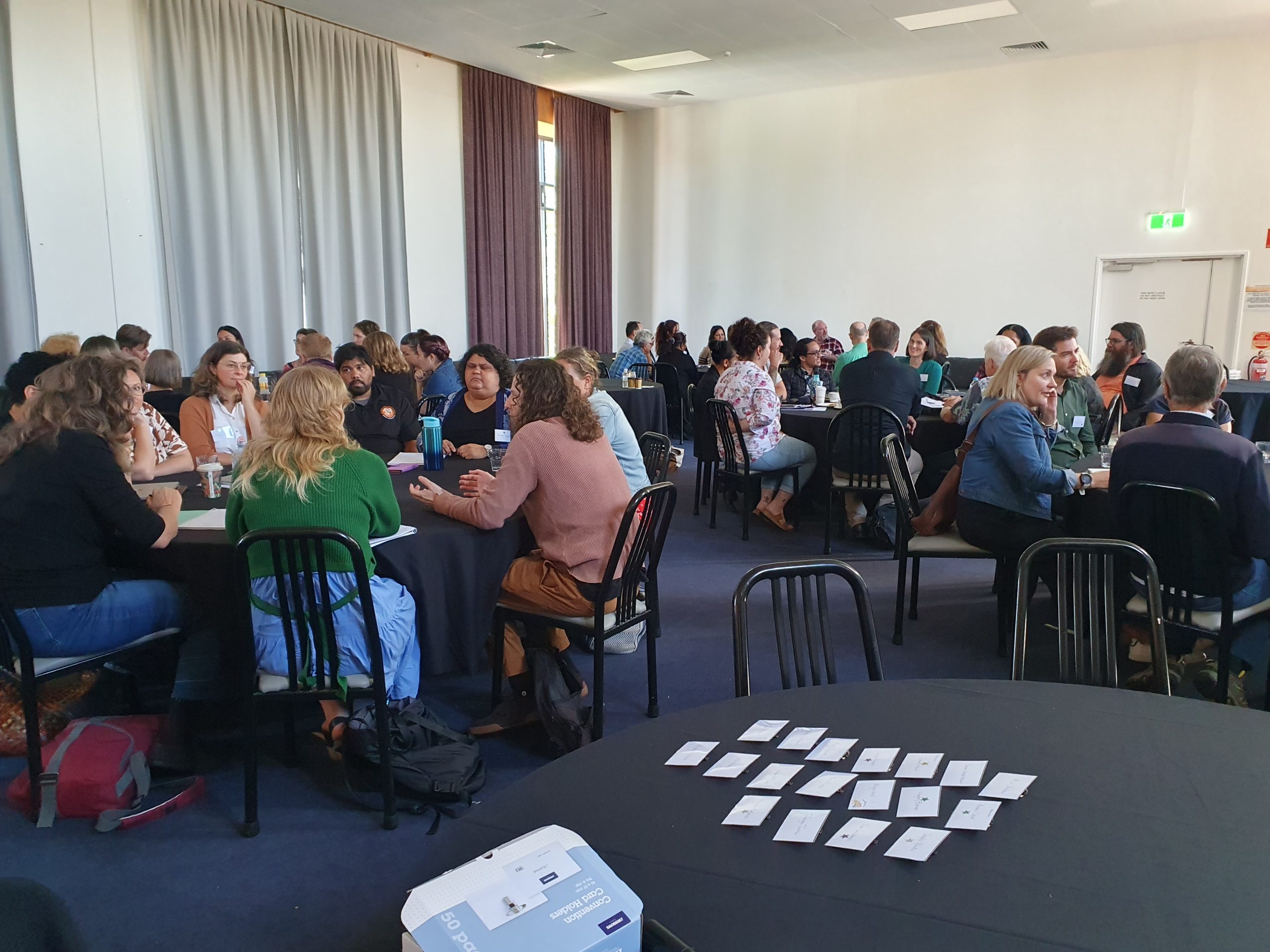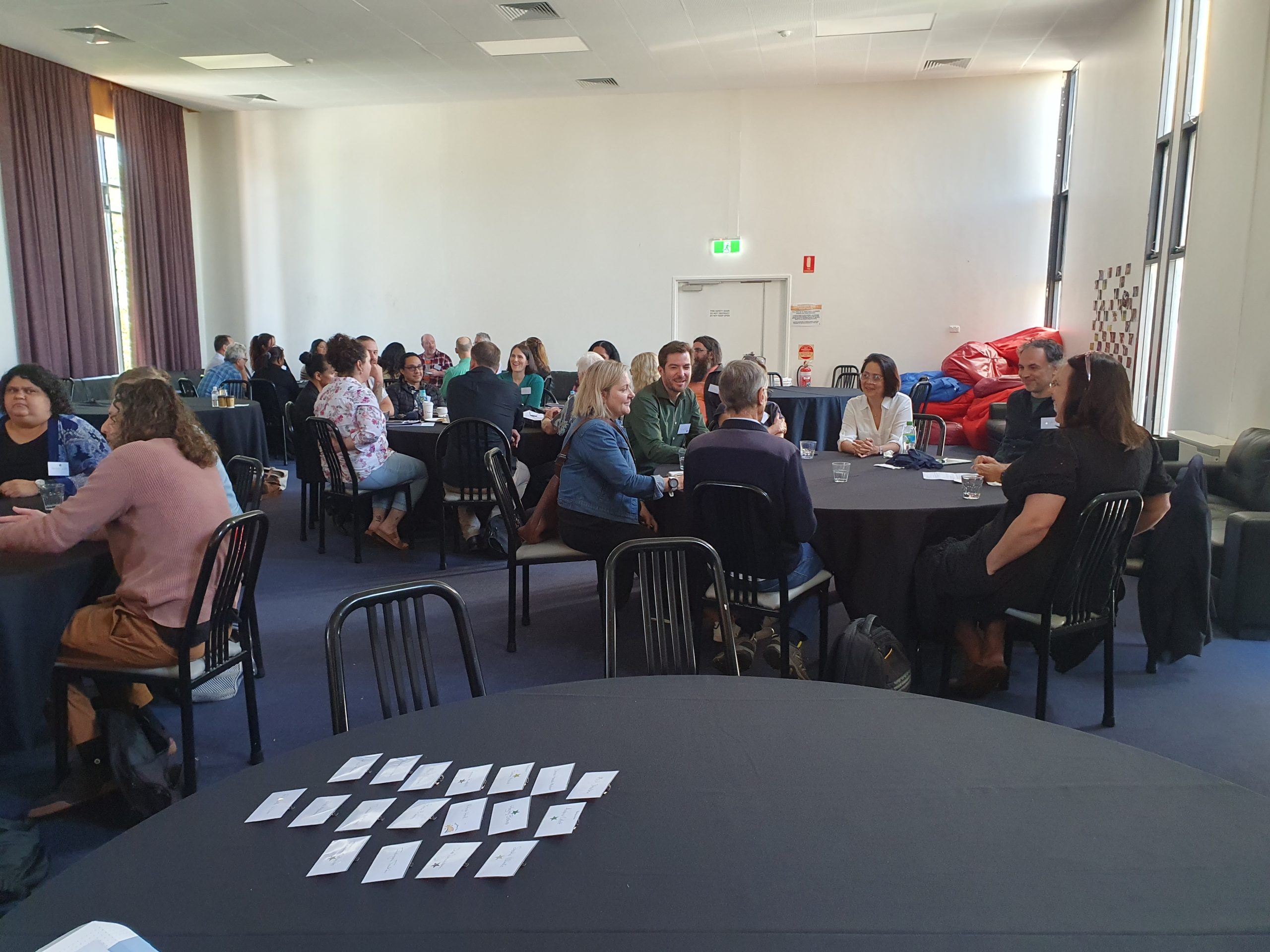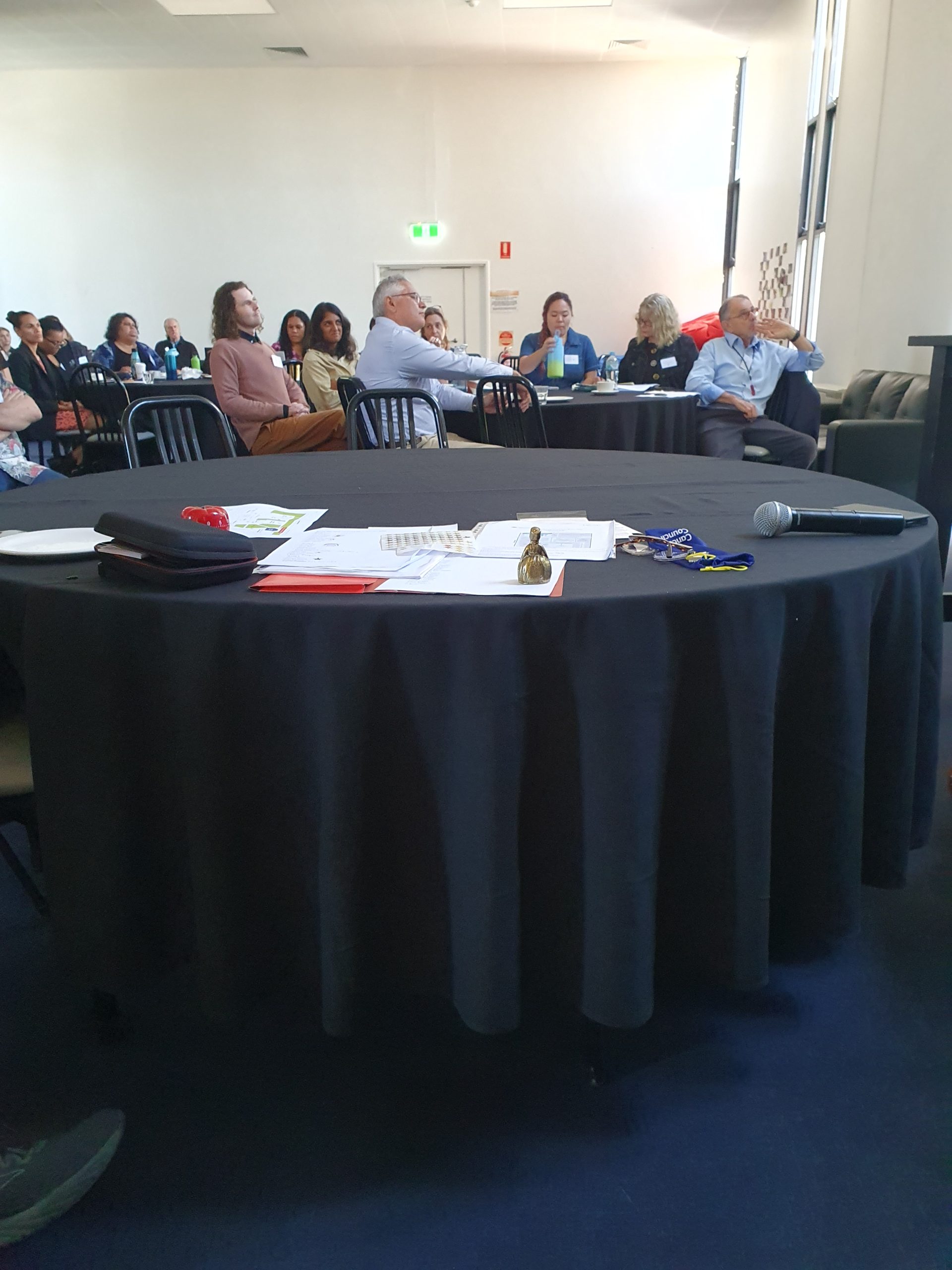
Annual Conference 2024
Read More about CNTA Annual Conference Program 2024
CNTA 2024 – Kevin Smith
The Opening Address for the CNTA Annual Conference
CNTA 2024 – Julie Finlayson
CNTA 2024 – Kevin Murphy
CNTA 2024 – Richard Martin
CNTA 2024 – Yvette Bradley
CNTA 2024 – Wendy Asche & Amy Usher
CNTA 2024 – Emma Kowal
CNTA 2024 – Erica, Andrew and David
CNTA 2024 – Francesa Merlan
CNTA 2024 – Innes & Vaarzon-Morel
COMMUNITY DEVELOPMENT UNIT: The highs and lows of collaboration
“For the CLC community development is a way of working that involves a set of principles and processes that build self-reliance and strengthen communities through the achievement of specific community objectives.Community development objectives may range from improving health and education to the establishment of a community enterprise.”
Community Development Unit Program Goal
Aboriginal people are controlling the development of our communities, homelands and building a strong future for everyone.
Objectives
- To increase Aboriginal engagement, ownership and control over the development of our communities, homelands and futures.
- To deliver development outcomes that are prioritised and valued by Aboriginal people, and that make a meaningful and sustained difference in our lives, communities, homelands and futures.
Native title compensation research: fieldwork and reporting practicalities
Definitional: Cultural Loss
Richard Martin (2023, p. 633) notes that in 2019 the High Court amended the decision to replace payment in solatium with money for “cultural loss,” which was construed by the court as compensable damage inflicted by another on the cultural value of native title. Martin notes that, in this legal usage, “compensation” is not an award to cover distress caused by extinguishment but is rather a valuation of the damage to “culture.”
In other words, in a native title compensation framework, “cultural loss” refers to the potential loss or damage to elements of traditional law and custom held by a group brought about via a specific act or series of events (which have been deemed to be compensable). As Martin explores (and will discuss further tomorrow), this legal interpretation is somewhat different to existing anthropological understandings relating to cultural loss and culture change through time.
Definitional: Compensable Acts and Effects
Northern Territory vs Griffiths [2019] describes 53 compensable acts in relation to various grants of tenure over land parcels within the town of Timber Creek, which were later held to have impaired or extinguished the Ngaliwurru and Nungali Peoples native title rights in those areas. The compensable acts were listed as occurring at the date of the granting of the tenure for each parcel (variously between 1980-1996).
Of note however, the High Court noted that there were “four events … which were not the direct result of compensable acts” but which were effects of those acts after the granting of the tenure. The Judge said that these events helped to explain why the “compensable act itself has a compensable effect which is not one dimensional”, leading the Judge to conclude that “the consequences of [compensable] acts can be incremental and cumulative”.
Notes from Paul Burke: The legal doctrine
I consider the following aspects of the legal doctrine to be relatively clear (paragraph numbers refer to High Court’s decision in Griffiths):
- The acceptance of a broad distinction between economic and non-economic loss (or cultural loss) when considering just terms compensation under section 51(1) of the Native Title Act for the ‘loss, diminution, impairment or other effect of the act on their native title rights and interests’.
- Economic loss is to be calculated by the usual valuation methods for the valuation of land at the time of the extinguishment/impairment (plus simple interest between that date and the date of the court judgement). In general terms, the procedure for assessing cultural loss is threefold:
- identification of the compensable acts (typically the granting of freehold interests or leases or public works such as roads);
- identification of the native title holders’ connection with the land or waters by their laws and customs; and
- consideration of the particular and inter-related effects of the compensable acts on that connection. (Para. 218) Because traditional ‘connection’ is spiritual/religious in nature, its loss or diminution
Expected Challenges: Towns and Disrupted Connections
Presentation to: Centre for Native Title Anthropology
Annual Conference February 7-9 2024, Adelaide
Francesca Merlan
Introduction
My talk is not about `unexpected’ challenges, but more about expected ones. I assert that towns are places of especial challenge for claims of connection unless circumstances have mitigated the challenge; diminished connection is to be expected rather than unexpected. Where connection has been disrupted, it is more difficult for native title processes to unfold consensually. Disrupted connection is a driver of contention.
I have done most of my longest-term research around a town in the northern Territory, Katherine. This has informed my opening question: where are native title (and generally matters of connection) more consensual; and where are they more conflicted. I will compare and contrast several examples of town situations and somewhat different outcomes.
I emphasize that my examples come from the far north, and from colonial intrusion that first occurred in a particular time period. It remains to consider the situation of towns more broadly.
Finally, for our discussion,and I need your help! what are the practical implications of disrupted connection? What kinds of socio-historical processes drive disrupted connection; and can the differences be managed, mediated?I make a few suggestions, some cautionary.
Ciarra Vu and Sheree Sharma
A better approach:
- Understanding the groups’ traditional law and custom with regards.
- Land holding: patriclans to particular areas of association. This will inform rules around native title decision making.
- Membership to the land holding group; this will inform the way in which membership applications are assessed by directors.
- Representation: Elders? Consensus? This will inform rules around board representation.
- Understanding the history of the group. Has removal history created tensions amongst family groups. This will inform what steps the group wishes to take to deal with these tensions before the PBC is established.
- Working with the whole group to develop, workshop and assess options that reflect the groups’ way of “doing business”. Generally done over a series of workshops well before the likely CD date.
- Increasing interactive participation into the workshops with the claim group.
- This knowledge and expertise goes beyond the skill set of a lawyer. Better outcomes are achieved when those with the right skills are involved.
Let’s Talk:Unexpected Challenges in the Native Title Landscape
Presentation to: Centre for Native Title Anthropology
Annual Conference 2024, Adelaide
Catherine Wohlan, Anthropologist
Introduction
After a stormy native title meeting, a few years ago now, at the front of the local store, opposite my family home that I had lived in for almost 20 years, a senior Aboriginal man gave me a good telling off. He said, ‘You have your degree, I have my law but what have these young people got? they’ve got nothing’. By way of background I’ll add that I had done fieldwork with him over several years, had got to know his life story and spent time with his family. The information he provided had helped to progress a successful native title determination. For me, the time we’d spent together had engendered a certain respect.
We both felt a sense of angst about conflict at the recent native title meeting. For me this was a sense of sadness about the arguments that ricocheted out of the meeting and into everyday life. His angst wasn’t fully articulated in his challenges to me. For him meetings were inevitably adversarial. I felt he was asking that, as an anthropologist, what was I doing to get things happening in a way that would make a real difference? What had I done for the young people? I was made to feel that I needed to do more; to do better.
Gallery