aa

Category Archives: Podcasts and videos

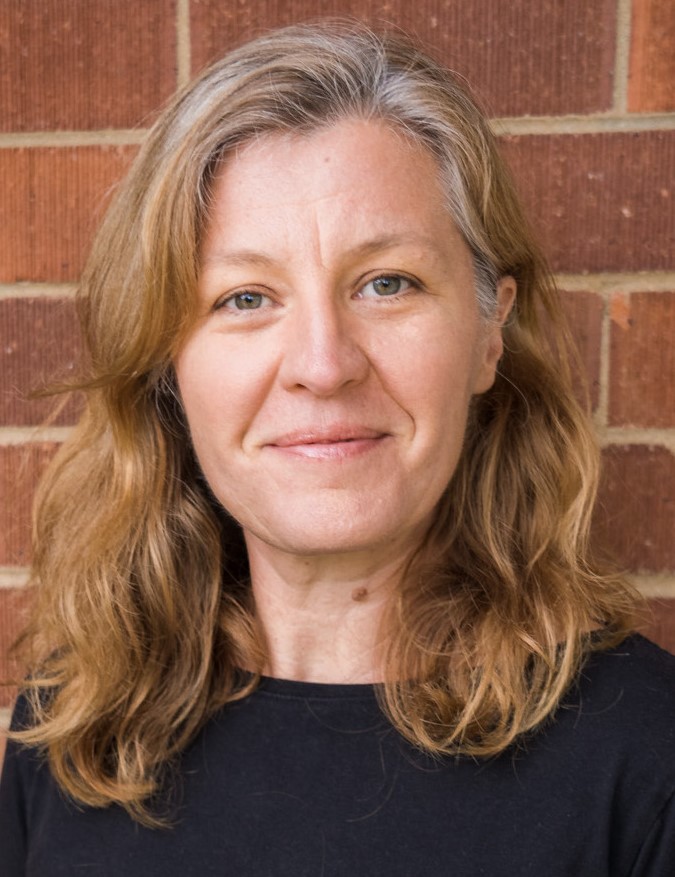
Kim McCaul interviews Federal Court Registrars: Expert Conferences

All you want to know about Federal Court experts’ conferences – and more!

Summary:In this CNTA-commissioned podcast, anthropologist Kim McCaul interviews Federal Court Registrars Ms Katie Stride and Ms Nicola Colbran about the mechanics of experts’ conferences on Native Title matters. The broad conversation ranges across issues of the nature and process of expert conferences, how to prepare for them, and what to expect as a participant. The Court’s expectations of the behaviour and the role of the expert is unpacked, including what is meant by propositions to put to the conference, the importance of being a ‘friend of the Court’ , and suggestions for how to effectively contribute to a successful conference. The concept of a ‘hot tub’ is also explained, together with the role of the Registrar.

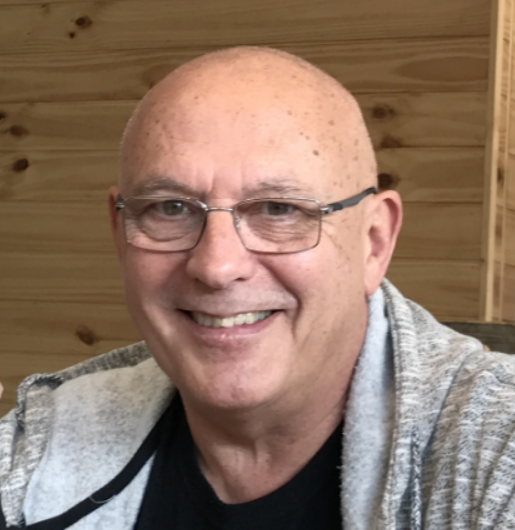
Preparation of Expert Reports – Kim McCaul interviews Ophelia Rubinich, John Morton & David Martin

Meeting the challenges of preparing Expert anthropological Reports in the Native Title arena

Summary: In this CNTA-commissioned podcast, Kim McCaul interviews other senior anthropologists Ophelia Rubinich, John Morton and David Martin about the pitfalls in preparing and writing Expert Reports for the Federal Court. Despite the requirement for anthropologists preparing Expert (and in general Connection) Reports to adhere to the obligations of the Federal Court for expert witnesses, there is still a failure amongst practitioners to fully do so. The anthropologists in this podcast outline these requirements, and strategies for preparing reports that address them. These include how to maintain our professional independence,  not providing opinions on legal matters (such as whether the criteria for establishing Native Title have been met), clearly setting out both the ethnographic, historical and other materials upon which we base our opinions and  the specifically anthropological process of reasoning by which we reach those opinions from those materials.


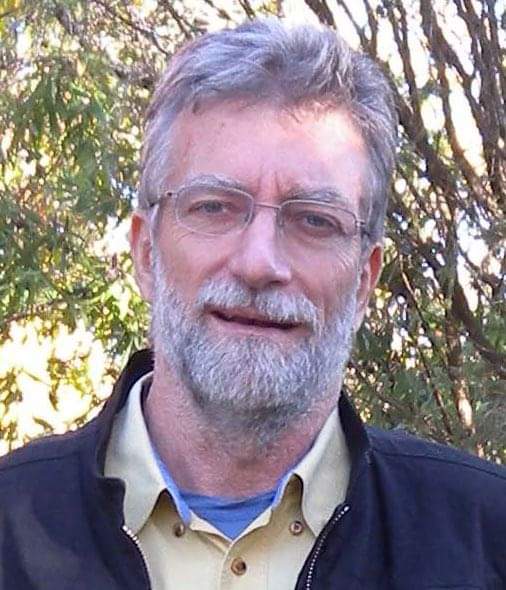
Central Land Council – interviews with staff of the Community Development Unit

Bringing a Community Development approach to the utilisation of income flows from Aboriginal lands

Summary: CNTA’s brief, under its funding from the Attorney General Department, is to provide professional development to anthropologists working in the native title arena. One set of issues to which CNTA is giving attention is the role of anthropologists in the post-determination phase, and this is where the methodology and learnings of the CD Unit in working with groups and communities in managing income streams from their lands for wider benefit is of considerable potential interest to anthropologists. While, of course, many CD Unit staff are not anthropologists, there is much here for anthropologists to learn.

The work of the CD Unit offers an illustrative example of the intense, collaborative engagement that is necessary at this intersection of Aboriginal and wider value systems, where monies gained from activities on Aboriginal lands are invested into broader community benefit. For these reasons, there is much to learn which is relevant to the governance of compensation funds held in trust by Prescribed Bodies Corporate and other entities (such as those established under mining agreements with Aboriginal groups).

In this first of two podcasts on this topic, anthropologist David Martin (a member of the CDU Reference Group) interviews Ian Sweeney, the Unit’s Manager, and four of the Project Officers, Dave Howard, Cecilia Tucker, Dianna Newham, and Carl O’Sullivan.

This second podcast builds on the first, and involves a collaborative dialogue between David Martin and each of Cecilia Tucker, Carl Sullivan, Dave Howard, and Diana Newham, on ethical and political issues they all face as anthropologists working with Aboriginal groups on social change in a framework of self-determination.

Further information on the work of the Community Development Unit can be found on the Central Land Council’s website.
Using historical records in Native Title research

Summary: In this, CNTA’s last podcast for 2020, Kim McCaul Interviews historian Tom Gara. Tom has a long professional history of working directly with Aboriginal people in Western Australia, the Northern Territory and South Australia. However, over past decades his research has focused increasingly on native title claims in South Australia, beginning with De Rose Hill, and the breadth of historical resources relevant to such cases.

With tips from an expert, Tom mentions specialist websites such as First Source which covers documents from 1860-1917, before canvassing the scope of key institutional records – such as the Lutheran Archives, Trove, United Aboriginal Mission (UAM) correspondence and publications, and State Government Aboriginal Affairs records.

Given his familiarity with the Tindale materials, now housed in the South Australian Museum, researchers outside South Australia will find Tom’s description of the extent of the Tindale repository useful and interesting. Not only are all Tindale’s journals, maps and notes to field notebooks available, but there are films, and files outlining changes to his own notes and publications.

Tom discusses less obvious sources to mine for historical materials; e.g. pointing out that lists of named local sporting players in football and cricket teams often connect individuals with specific areas. Similarly, war records usefully detail the age and next of kin of the enlisted individual, and will include an accal societies.ompanying photograph. And never missing the opportunity to survey the shelves of local libraries in country towns and historic

Kinship and Genealogies

A video presentation by Nic Peterson

In an April 2020 virtual workshop for NTRBs based in Cairns, Nic Peterson provided a brief introduction to some basic features of Aboriginal kinship, focusing on the different ways in which people are classified: as relatives, by descent, and by moieties, as well as the difference between cross and parallel cousins.  I look at what W. H. Rivers meant by the ‘Genealogical Method’ before talking about some practical issues in the taking of extended and brief genealogies.  The talk ends with reference to the way that the large age difference at marriage between girls and their first husband in classical promise marriage systems. Such systems were operative in remote Australia until the 1970s, and greatly affected kinship, genealogy, and the social systems more generally.