About the Centre for Native Title Anthropology (CNTA)
The CNTA is a unit within the School of Social Science at the University of Queensland. CNTA has been awarded successive grants since 2010 by the Department of the Attorney General to deliver professional development to anthropologists working in the native title arena.
The CNTA Directors are Associate Professor Richard Martin, Dr Kim de Rijke and Ms Wendy Asche and the Research Manager is Ms Louise Allwood.
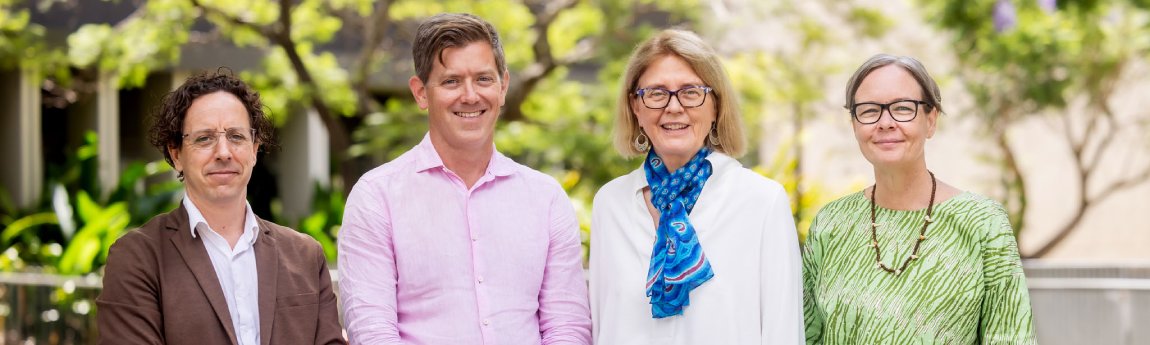
L to R Kim de Rijke, Richard Martin, Wendy Asche and Louise Allwood
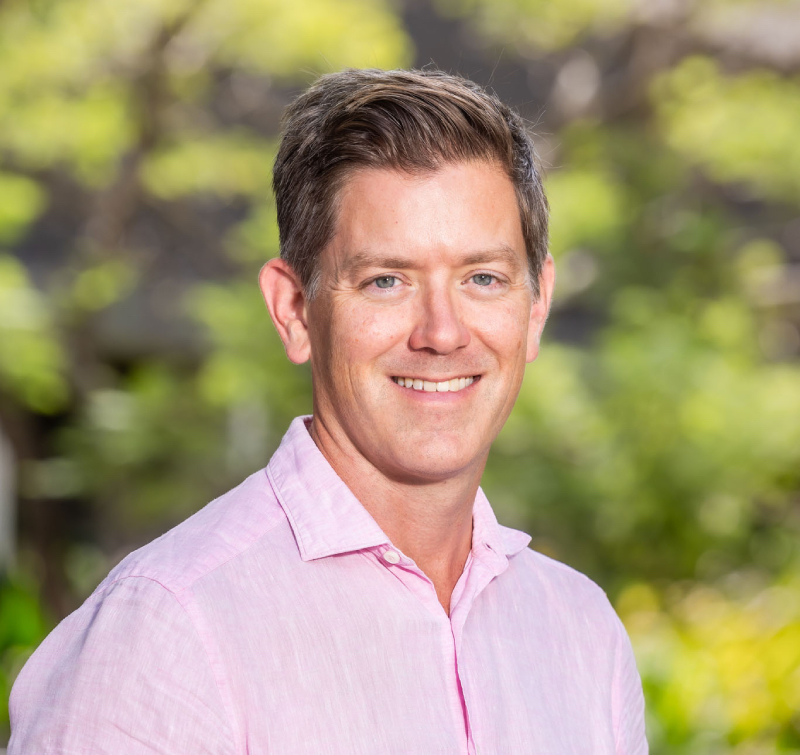
Richard Martin
Richard Martin is an Associate Professor in Anthropology at The University of Queensland and co-Director of the Centre for Native Title Anthropology. His research explores the intersections of law, history, and culture in Australia, with a focus on Indigenous rights, native title, and the anthropology of colonialism.
Martin has authored numerous expert reports for native title claims and provided expert evidence in the Federal Court in cases such as Rainbow on behalf of the Kurtjar People (No 2) [2021] FCA 1251 and Malone on behalf of the Western Kangoulu People v State of Queensland (No 6) [2025] FCA 363. Martin has also reviewed anthropological materials for respondent parties in native title proceedings.
His work has been widely published in leading anthropology journals. His monograph The Gulf Country: The Story of People and Place in Outback Queensland (Allen & Unwin, 2019) offers a critical history of Aboriginal-pastoral relations and regional change in northern Australia. He is currently undertaking research about compensation for harm to culture and cultural loss funded by a UQ Foundation Research Excellence Award (2024) and an ARC Discovery Project Award (2025-28).
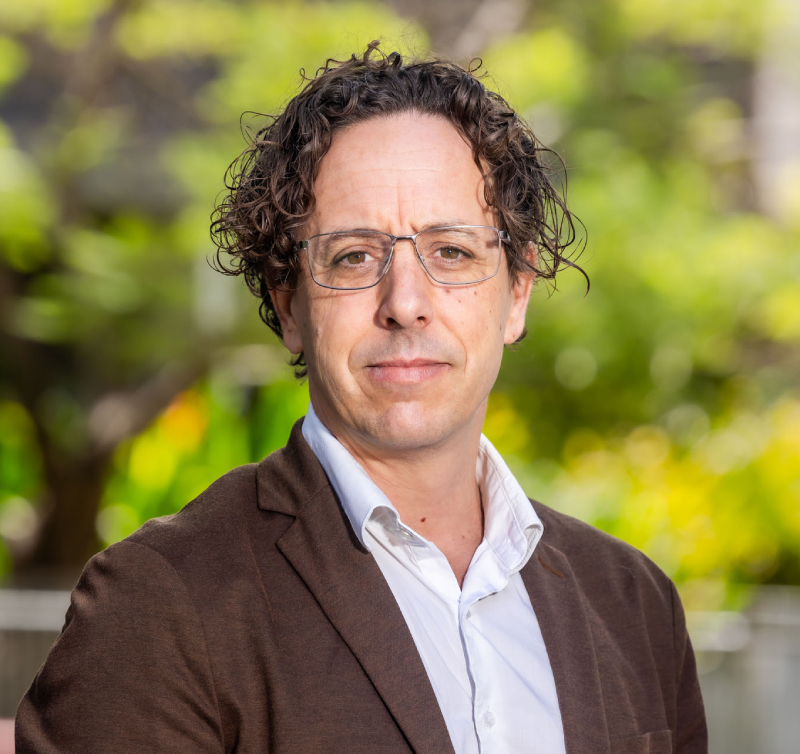
Dr Kim de Rijke
Dr Kim de Rijke is a Senior Lecturer in Anthropology at the University of Queensland and co-Director of the Centre for Native Title Anthropology. His academic research addresses environmental relations, senses of place, and the sociocultural dimensions of resource extraction, with a particular focus over the last decade on contested unconventional gas developments in Australia.
Alongside his academic research, Dr de Rijke has undertaken 22 years of research on native title and heritage, working initially as Managing Anthropologist at the Kimberley Land Council and as Senior Anthropologist at the Central Queensland Land Council. He has provided expert evidence in the Federal Court on native title and has been engaged in attempts to resolve disputes about group membership and contested connections in the context of Indigenous Land Use Agreements. He teaches undergraduate environmental anthropology, ethnographic fieldwork and social impact assessment, and is currently also the Director of Higher Degree by Research at the UQ School of Social Science.
His work has been published in a range of journals and volumes, including interdisciplinary outlets, and his work on energy has been referred to in national and international energy policy reviews.
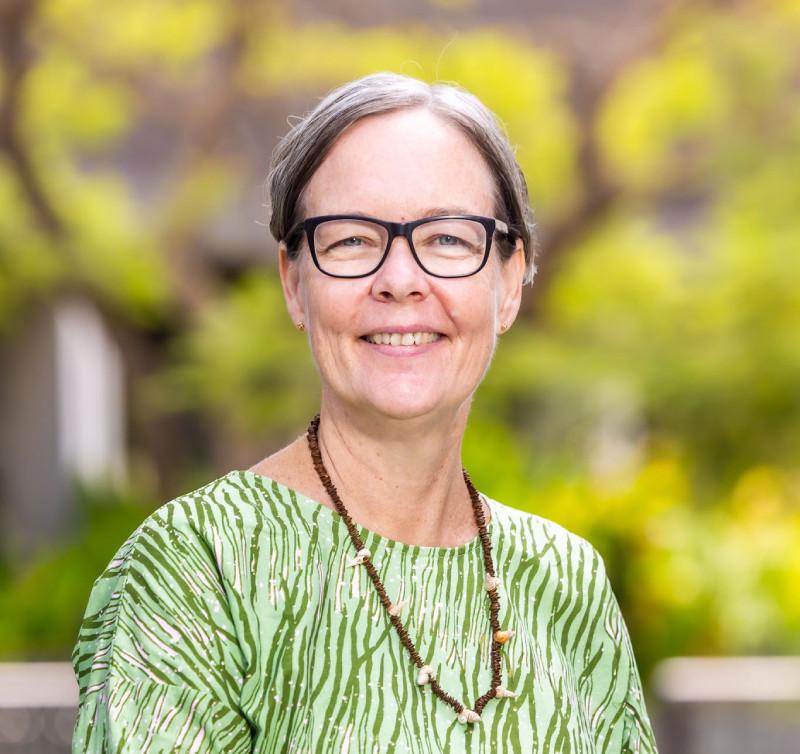
Louise Allwood
Louise Allwood is the Research Manager of the Centre for Native Title Anthropology. Coming from a registered nurse background, Louise began her anthropological career as a medical anthropologist before moving into the native title sector.
She has extensive applied anthropological experience working at the interface of Traditional Owners and the native title system. She has worked at the North Queensland Land Council (NQLC) in Cairns and at the Northern Land Council (NLC) in Darwin, where she held senior research and management positions.
In these roles she has mentored anthropologists, written expert reports for the Federal Court and contributed to many successful native title claims across Central, Western and Northern Queensland and in the Top End of the Northern Territory. She has also contributed to the McArthur River Project Compensation Claim and major projects including the SunCable Australia-Asia Power Link Renewable Energy Project and the Australia-Singapore Military (Greenvale) Training Area Project.
She has worked with Prescribed Body Corporates (PBC), assisting with the facilitation of their negotiation rights with proponents, including future act expedited procedure objections. She also has experience mediating intra- and intergroup disputes and has published on building relationships with Traditional Owners during conflict.